
/webcode.jsp
/en/search/index.jsp
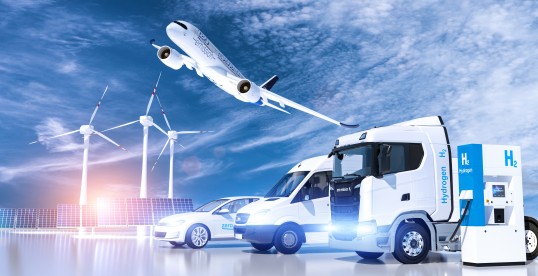
Source: AA+W - stock.adobe.com
Alternative fuels can be divided into two categories: firstly, renewable fuels, and secondly, fossil energy carriers such as liquefied petroleum gas (LPG, i.e. propane, butane or a mixture of the two) and natural gas (compressed natural gas (CNG), the main component of which is methane), and synthetic liquid fuels based on natural gas or coal [e.g. 1; 2].
The focus of this trend description lies on renewable fuels. These fall in turn into two categories: biofuels and electrofuels. Biofuels (biogenic fuels) can be used in a wide range of ways: as fuel for diesel engines, in the form of biodiesel produced from fatty acid methyl esters (FAMEs) or HVO diesel produced from hydrogenated vegetable oils; as fuel for petrol engines, in the form of bioethanol, used for petrol blends (E5, E10); as biomethane, for use in natural gas powered vehicles; as marine fuel, in the form of biomethanol; and as aviation biofuel, in the form of HEFA jet fuel, produced from hydroprocessed esters and fatty acids. Biofuels are produced from biomass and exist in liquid (biodiesel, HVO diesel, bioethanol, biomethanol, HEFA jet fuel) or gaseous (biomethane) form [2; 3]. Biofuels are also differentiated according to their respective biomass raw materials:
Owing to conflicts in the uses of cultivated biomass, preference is to be given to advanced biogenic fuels in the future [4; 5]. Oil-bearing plants and used cooking oils are first processed to HVO, which is used in turn to produce fuel [3; 6].
Electrofuels (e-fuels) include hydrogen and its derivative products [7]. They are considered to have the greatest potential for reducing greenhouse gas emissions [8] – not least owing to the limited availability of biogenic fuels [9]. "Green hydrogen" is produced by the electrolysis of water, using electricity from surplus renewable energies (REs). Hydrogen can be used directly as an energy carrier (e.g. in fuel cells) or converted into synthetic fuels in a further step with the use of carbon dioxide (CO2) in a power-to-liquid (PtL) or power-to-gas (PtG) process [7]. The synthetic fuels can exist in different aggregate states: liquid (e-petrol, e-diesel, e-jet fuel, e-methanol (CH3OH)), gaseous/liquid (e-ammonia (NH3)) or gaseous/liquid/compressed (e-methane (CH4), hydrogen).
Renewable fuels can also be produced by the sun-to-liquid process. In this solar-thermochemical process, currently at the development stage, sunlight, water and air are used to produce drop-in jet fuel [10; 11]. "Drop-in" capability refers to compatibility with existing fleets without the need for technical modifications to the vehicles or means of transport, or a dedicated infrastructure.
The strongest factor driving sustainable mobility is climate change. In the "RED III", a revision of the EU Renewable Energy Directive (RED) adopted in 2023 and to be transposed into national law, the European Union specified a minimum RE share of 29% for the final energy consumption in the EU transport sector in 2030 [12]. The RE share in Germany in 2023 was 7.5% [13]. The RED III stipulates a share of 5.5% for advanced biofuels and renewable fuels of non-biological origin (RFNBOs) in the final energy consumption of the transport sector; the RFNBO share must be at least 1%. At the same time, the use of biofuels and biogas produced from used cooking oil will be limited to 1.7%; in order to protect natural carbon sinks and areas of high biodiversity value, the use of conventional biofuels will be limited to 7% [12]. By 2030, renewable fuels are to enable CO2 savings of 10 million tons in Germany [4].
The development of sustainable mobility is also being promoted by the desire for greater resilience in the face of global events, such as wars, and current tensions in long-standing economic relations. Parallel to this is the intention to reduce dependency on raw materials and to increase the security of supply [14; 15]. The use of alternative fuels can be an intelligent complement to alternative drive systems (e-mobility and fuel cell technology), particularly in transport modes that are difficult to electrify, such as aviation, shipping and heavy road freight transport [4; 5]. The use of e-fuels in road transport is viewed critically, as e-mobility can be implemented in this transport mode with greater efficiency and at lower cost [8; 15]; higher percentages of biofuels in blends may be attainable, however [8]. At present, a maximum of 10% FAME may be added to fossil diesel, and 5% (E5) or 10% (E10) bioethanol to petrol. On the European market, only a small number of manufacturers offer flexible fuel vehicles (FFVs), i.e. with engines specifically designed for E85 (85% bioethanol and 15% petrol); engines of non-FFVs require approval for the use of E85 [16]. The same holds for HVO100 diesel, which is drop-in-compatible [17]. Acceptance of higher blend quotas also requires the biomass used for this purpose to be obtained from verifiably sustainable sources.
Fuel cell vehicles have considerable potential for use in heavy goods transport, buses in local public transport, and agricultural and construction machinery [18]. For this reason, a basic infrastructure network for refuelling hydrogen-powered trucks is to be established along the trans-European transport network in Germany, and support provided for expansion of the refuelling infrastructure for commercial vehicles at logistics hubs and depots [19]. To support ramping up of the market for alternative fuels, the German government allocated €1.54 billion for a funding scheme for the period from 2021 to 2024 [4].
In 2023, the EU adopted the Regulation on the use of renewable and low-carbon fuels in maritime transport (FuelEU Maritime). The aim of this regulation is to achieve a progressive reduction in the greenhouse gas intensity of fuels used in maritime shipping, from -2% in 2025 to -80% in 2050 [20]. Consequently, fossil fuels used in maritime shipping are to be replaced progressively by FAME, HVO, and green hydrogen or its derivative products, e-ammonia and e-methanol. The latter are considered suitable marine fuels for the future [e.g. 21; 22; 23]. Owing to their drop-in capability, FAME and HVO are suitable near-term substitutes for fossil fuels [24].
To promote the production of PtL jet fuel and oblige airlines to purchase it, the EU adopted the Regulation on ensuring a level playing field for sustainable air transport (ReFuelEU Aviation) in 2023. This regulation sets mandatory percentages for sustainable aviation fuels (SAFs) in blends [25-27]. SAF percentages of up to 50% in blends are currently permissible. Beginning in 2025, all flights departing from Europe must use fuel with 2% SAF, rising to 5% in 2030 [25]. Fuel cells are suitable for small aircraft or regional flights; ammonia has potential as a fuel for medium-haul flights, particularly in the cargo sector, and in hybrid-electric aircraft. However, use of either hydrogen or ammonia as energy carriers requires changes to the infrastructure (new aircraft designs, supply of these energy carriers to airports, refuelling infrastructure) [9; 15].
Despite these driving factors, neither advanced biofuels nor synthetic e-fuels are currently being manufactured on an industrial scale, even though the production processes for both fuel types are technically proven in principle. One prerequisite for the large-scale production of e-fuels is the availability of surplus renewable energy for conversion into hydrogen. This requires a massive expansion of renewable energy in Germany, Europe and beyond, together with sustainable CO2 sources [4; 5; 15; 26; 28; 29]. Carbon dioxide captured from the atmosphere or from sustainable biogenic sources, and also from process emissions that at present are still unavoidable, is deemed sustainable, provided the utilization of CO2 does not slow down the decarbonization process [26]. A further prerequisite is the development of a hydrogen infrastructure and a hydrogen market. The German government therefore aims to increase electrolysis capacity from 57 megawatts to 10 gigawatts between 2022 and 2030 [29; 30]. In addition, an initial grid of converted or newly laid hydrogen pipelines, with a length of 1,800 kilometres, is to be created by 2027/2028 and connected to neighbouring EU countries by 2030. By 2032, an 11,000-kilometre German hydrogen core network is to connect all major hydrogen suppliers with all major offtakers [29]. The German Hydrogen Acceleration Act (WassBG), adopted by the German federal cabinet in May 2024, simplifies and accelerates planning, approval and competitive tendering procedures for the expansion and development of a hydrogen infrastructure [31]. Uncertainties regarding the speed of expansion of renewable energies and the availability of green hydrogen are placing doubt on when e-fuels will reach market maturity. This is hampering production planning.
Since Germany continues to be dependent on hydrogen imports, fair and sustainable electrofuel partnerships are planned with countries that already or potentially possess surplus renewable energy [19]. E-fuels in the form of ammonia and methanol are not merely suitable for shipping, but are also the most economical and energy-efficient methods of transport for covering great distances by ship, alongside liquid hydrogen carriers (LHCs) [32]. However, none of the options for storage of the substances is uncritical: LHCs and ammonia pose a threat to water and the environment in the event of leaks, spills and accidents [33-35]. Methanol poses particular challenges for firefighting, owing to its poorly visible flame, its good miscibility with water and its low flash point [35; 36].
In addition to the political will and suitable research funding, other factors decisive for climate-neutral mobility include social acceptance of an approach in which processes are optimized as a whole, with consideration for all ensuing (external) costs rather than merely short-term economics [37].
The following sectors are particularly affected:
Refineries, oil companies, the chemical industry, import and production of raw materials, waste management, agriculture and forestry, the power generation industry, machinery and vehicle manufacturing, the automotive industry including suppliers, workshops for cars and commercial vehicles, the aircraft industry including suppliers, air transport, shipping and shipbuilding including suppliers, shipyards, ports/hydraulic engineering, the construction industry, filling stations, logistics, research institutions, insurance companies, public services, fire brigades, emergency and security services.
Lowering greenhouse gas emissions by using sustainable renewable fuels benefits everyone, as health risks caused by climate change are reduced. In addition, air quality improves, since significantly fewer pollutants are released during the combustion of renewable fuels compared to fossil fuels [38].
In the context of defossilisation, industry faces the challenge of identifying suitable market segments for the use of renewable fuels, rapidly bringing about compatibility with renewable fuels and energy carriers, and finding and implementing safe solutions, for example for transport and bunkering (taking on board vessels) of these fuels [39]. In consequence, new ships are currently being built primarily with dual-fuel combustion engines for ammonia or methanol in combination with diesel, or with multi-fuel combustion engines. Efforts are also being made to convert existing engines to ammonia or methanol. Suitable tanks and on-board fuel supply systems are being developed by the respective manufacturers. Retrofitting and converting fleets entails considerable effort and expense, and experience must be gained with the new systems [36; 39]. Substantial new infrastructure may also have to be erected within a short space of time, such as hydrogen import terminals on the German coast. Up until 2030, the focus will be on imports by ship; after that, the emphasis will lie on pipeline-based European imports. This will require the commissioning of new high-capacity pipelines or the conversion of natural gas pipelines that are no longer required [29].
Oil companies are also undergoing change: they must switch the energy used for production of their products to renewable energies, drive innovation forward and develop their renewable fuels further in accordance with the applicable statutory requirements. To meet the requirements of the RED III, biofuel producers need suitable raw materials. Requirements for the traceability and documentation of raw materials are becoming stricter. To prevent false declarations of imported advanced biofuels, registration obligations and licensing procedures for producers are envisaged, as are regulatory controls [40]. In the interests of the circular economy, the waste management sector must collect and sort local biogenic residues and waste on a greater scale and make them available to refineries and bioproduction plants for utilisation.
Filling station operators must diversify their range of fuel products and increasingly adopt low-emissions products [41]. Neither newly developed petrol fuels with higher ethanol contents (e.g. E20) nor fuels for diesel engines with additive percentages appear to present new risks to occupational safety and health. In some cases, risks are even decreasing: HVO100 diesel, for example, has a higher flash point than fossil diesel and is therefore less flammable [17].
The need to adopt a broad, technology-neutral approach is accompanied by rising workloads and needs for training in the sectors concerned. The shortage of skilled workers along the hydrogen value chain is also a significant factor in this context, particularly regarding the construction of electrolysers, pipelines and production facilities and, in the future, for transport of energy carriers by ship [42].
Engineered nanomaterials, including carbon nanotubes (CNTs), are used in biodiesel production [43]. Some CNTs have been shown at high doses in animal experiments to cause inflammatory changes in the lungs or to be carcinogenic [44]. Improved measurement methods for the investigation of potentially hazardous exposure to CNTs and further research into possible release scenarios for CNT applications in an occupational context are desirable [e.g. 43]. Genetic engineering is also used, for example to increase yields in the production of innovative algae-oil-based biofuels [38]. For use in the sun-to-liquid process, work is in progress on fibre-reinforced ceramic support structures for pipes capable of withstanding temperatures of up to 1,500 °C [10]. The processing of ceramic fibre products may lead to the release of carcinogenic fibre dusts [45].
Renewable fuels give rise to the need for the acquisition of skills and raising of awareness, primarily owing to the physical and chemical risks they pose. Comprehensive knowledge of these risks and suitable protective measures already exist in sectors such as the chemical industry, and it appears advantageous to transfer this knowledge to sectors that are becoming affected [42]. At the same time, as described below, new or increasingly frequent hazards also exist, which may require safety concepts to be developed further:
CO2 is required in the production process of most e-fuels; CO2 capture and transport processes are therefore likely to become a focus of occupational safety and health. Until now, CO2 capture has mainly taken the form of point capture directly at sources of industrial emissions by the use of various processes that also employ carcinogenic, mutagenic or reprotoxic (CMR) solvents or aqueous amine/ammonia/hydroxide-based solvents. In addition to being toxic, amine and ammonia-based solvents may also form carcinogenic compounds, such as nitrosamines [46; 47].
CO2 is generally transported in compressed (i.e. in most cases liquid) form. For example, a CO2 pipeline grid, the first of its kind in the world and extending from North Rhine-Westphalia to the North Sea, is currently being planned. Risks arising during transport, which must be addressed for example by rules governing the purity and composition of the CO2, include corrosion caused by contamination with nitrogen or sulphur oxides, water vapour, and the formation of gaseous carbon dioxide in the event of a pressure drop [47; 48].
Hydrogen can give rise to hazards wherever it is used as a fuel or processed further. For the most part, a risk exists of fire and explosion occurring as a result of leaks. To counter risks when hydrogen is being handled, occupational health and safety rules and protection concepts are in place [49-52]. In this context, it is important that a systematic risk assessment be performed at the workplaces concerned and that material, component and system stresses be analysed in advance [46; 49; 53]. New nanomaterials can help to improve occupational safety, as larger sensor surface areas enable them to detect leaks in hydrogen systems and tanks more efficiently [54]. The ignition phenomena and event chains of liquid or cryogenic hydrogen, in particular, are not yet fully understood. This also applies to non-industrial areas of application in which existing safety concepts from the industrial sector cannot readily be adopted. For example, conventional explosion protection is designed for atmospheric conditions and must often be adapted for compressed and/or cryogenic hydrogen [55; 56]. Experimental research and 3D simulations continue to be needed for evaluation of scenarios in which hydrogen (and its derivatives) are released [57].
For the supply of fuel for fuel cell vehicles, direct supply of hydrogen filling stations by means of stationary electrolysis appears to be the most economically viable option [58]. This may result in a need for training of workers at filling stations and logistics hubs to ensure safe work on pressurized gas systems and protection against explosion [18]. Persons working on fuel cell vehicles following commissioning of the fuel cell system must be skilled in work on high-voltage and gas systems; operators of hydrogen vehicles require instruction, for example on flammable and pressurized gases [18]. Occupational safety and health bodies provide information on hydrogen safety in workshops for fuel cell vehicles and vehicles with hydrogen combustion engines [59].
FAME and HVO are drop-in compatible; the safety precautions already in place for fossil diesel can therefore be adopted for their transport, transshipment and, in the case of ships, bunkering [24]. FAME and FAME blends are hygroscopic, i.e. they bind water from their environment and thus promote the growth of microorganisms. When these fuels are stored for prolonged periods, the microorganisms can cause filter clogging and corrosion in tanks, and may pose a safety risk [e.g. 24]. Owing to the more humid environment, larger tank volumes and longer periods of storage, this risk primarily affects ships. Handling of FAME and HVO and exposure to it are not new occupational safety and health topics, and proven safety concepts are available. In order to meet the demand for marine biofuels, series of tests are currently being conducted on new liquid biofuels and blends, based for example on cashew nutshells [24]. These new developments require analysis not only of system compatibility and specific properties, but also of their potential risks for workers.
Ammonia is one of the most widely produced chemicals and serves as a raw material for numerous other industrial products. As it is shipped as a raw material for fertilizer production, a global network of ammonia terminals and transshipment facilities is already in place. However, an infrastructure for bunkering ammonia does not yet exist [39].
The shipping industry has already gained extensive practical experience with methanol as a cargo but currently lacks the corresponding experience with methanol as a fuel. Standards for bunkering are currently being developed, as are technical solutions for on-board conversion of methanol to hydrogen on ships with fuel cell propulsion [36]. Risks associated with ammonia and methanol – essentially their toxicity, and fire and explosion hazards – are generally well known, and safety measures are already in place. The use of these substances as marine fuels, however, is new. Lack of experience among ships’ crews in handling these fuels, which require adapted safety management systems, gives rise to greater safety risks and a corresponding need for training [60].
In many cases, LHCs are "substances of very high concern" (SVHCs) in their own right (e.g. dibenzyl toluene, perhydro dibenzyl toluene) or give rise to such substances as by-products (e.g. benzene, xylenes, carbon monoxide). The large-scale use of LHCs must be preceded by a realistic risk assessment and further collection and evaluation of data [61].
Increasing the SAF quota may present airlines with a risk of inferior SAFs: whether as a result of fraud, triggered by the higher costs of SAFs, or owing to faults in new production processes or poor quality of biological raw materials. Strict quality controls are essential to ensure that the operational safety and performance of aircraft are not compromised [62].
The availability of advanced biogenic fuels produced from biogenic residues and waste materials is limited [9]. To mitigate this limitation, a British company has produced jet fuel from human excrement [63]. Its use would, however, require the creation of new recycling infrastructures, and microbiological hazards in the supply chain would need to be controlled.
In the cruise flight phase, soot particle emissions could be reduced by 50% to 70% by a blend with 50% PtL jet fuel. This would reduce the formation of vapour trails, which exacerbate the harmful greenhouse effect, and would also reduce the risk of respiratory diseases among airport workers and the wider population [26; 64].
|
[1] Factsheet: Übersicht und Einordnung alternativer Kraftstoffe. Hrsg.: NOW GmbH, Berlin 2021
https://www.now-gmbh.de/wp-content/uploads/2021/11/Factsheet_alternative-Kraftstoffe_NOW-GmbH.pdf (nicht barrierefrei) (abgerufen am 02.12.2024)
[2] Kraftstoffe und Antriebe. Hrsg.: Umweltbundesamt, Dessau-Roßlau 2024
https://www.umweltbundesamt.de/themen/verkehr/kraftstoffe-antriebe##konventionellekraftstoffe, 12.02.2024 (abgerufen am 02.11.2024)
[3] Alternative Kraftstoffe. Hrsg.: Bundesministerium für Umwelt, Naturschutz, nukleare Sicherheit und Verbraucherschutz, Berlin
https://www.bmuv.de/FQ145 (abgerufen am 29.11.2024)
[4] Klimaschutz im Verkehr - Erneuerbare Kraftstoffe. Hrsg.: Bundesministerium für Digitales und Verkehr, Berlin 2025
https://bmdv.bund.de/DE/Themen/Mobilitaet/Klimaschutz-im-Verkehr/Alternative-Kraftstoffe/alternative-kraftstoffe.html, 13.08.2025 (abgerufen am 30.09.2025)
[5] Nationale Plattform Zukunft der Mobilität (NPM) Arbeitsgruppe 1 "Klimaschutz im Verkehr": Werkstattbericht Alternative Kraftstoffe. Klimawirkungen und Wege zum Einsatz alternativer Kraftstoffe. Hrsg.: Bundesministerium für Verkehr und digitale Infrastruktur, Berlin 2020
https://www.plattform-zukunft-mobilitaet.de/wp-content/uploads/2020/12/NPM_AG1_Werkstattbericht_AK.pdf (nicht barrierefrei) (abgerufen am 26.11.2024)
[6] Themenportal Biokraftstoffe - Biodiesel. Hrsg.: Fachagentur Nachwachsende Rohstoffe e. V. (FNR), Gülzow-Prüzen
https://biokraftstoffe.fnr.de/kraftstoffe/biodiesel (abgerufen am 05.03.2025)
[7] Erneuerbare Kraftstoffe - Wissen. Hrsg.: NOW GmbH Nationale Organisation Wasserstoff- und Brennstoffzellentechnologie, Berlin
https://erneuerbarekraftstoffe.de/wissen/ (abgerufen am 22.11.2024)
[8] Nationale Plattform Zukunft der Mobilität (NPM), Arbeitsgruppe 2 "Alternative Antriebe und Kraftstoffe für nachhaltige Mobilität": Roadmap - Markthochläufe alternativer Antriebe und Kraftstoffe aus technologischer Perspektive. Hrsg.: Bundesministerium für Verkehr und digitale Infrastruktur (BMVI), Berlin 2021
https://www.plattform-zukunft-mobilitaet.de/wp-content/uploads/2021/04/NPM_AG2_Technologie_Roadmap.pdf (abgerufen am 02.12.2024)
[9] Walker, T. K.; Tatsutani, M.; Lewis, J.: Decarbonizing Aviation: Enabling Technologies for a Net-Zero Future. Hrsg.: Clean Air Task Force, Boston 2024
https://www.catf.us/resource/decarbonizing-aviation-enabling-technologies-net-zero-future/ (abgerufen am 30.05.2025)
[10] When sunlight becomes fuel. Hrsg.: München 01.02.2024
https://www.fraunhofer.de/en/press/research-news/2024/february-2024/when-sunlight-becomes-fuel.html
[11] SUN-to-LIQUID mit dem Energy Globe World Award ausgezeichnet. Hrsg.: Bauhaus Luftfahrt The Aviation Think Tank, Taufkirchen 2025
https://www.bauhaus-luftfahrt.net/de/forschungsbereiche/future-aviation-fuels/sun-to-liquid-mit-dem-energy-globe-world-award-ausgezeichnet (abgerufen am 05.03.2025)
[12] Erneuerbare-Energien Richtlinie III (RED III). Ziele für erneuerbare Kraftstoffe im Verkehr. Hrsg.: NOW GmbH, Berlin 2024
https://www.now-gmbh.de/wp-content/uploads/2024/04/NOW-Factsheet_REDIII.pdf (nicht barrierefrei) (abgerufen am 10.01.2025)
[13] Erneuerbare Energien in Zahlen. Hrsg.: Umweltbundesamt, Dessau-Roßlau 2023
https://www.umweltbundesamt.de/themen/klima-energie/erneuerbare-energien/erneuerbare-energien-in-zahlen#ueberblick (abgerufen am 22.06.2023)
[14] Nationale Plattform Zukunft der Mobilität (NPM): Ergebnisbericht der Nationalen Plattform Zukunft der Mobilität - Ergebnisse aus drei Jahren NPM (2018 - 2021). Hrsg.: Bundesministerium für Verkehr und digitale Infrastruktur (BMVI), Berlin 2021
https://www.plattform-zukunft-mobilitaet.de/wp-content/uploads/2021/10/20211011-NPM-EB21-DE-digital-final.pdf (nicht barrierefrei) (abgerufen am 28.05.2024)
[15] Aigner, M. e. a., ,: Forschungsinitiative Energiewende im Verkehr. Kurzbericht zur "Roadmap für strombasierte Kraftstoffe". Hrsg.: Verbundvorhaben BEniVer. Begleitforschung Energiewende im Verkehr, Stuttgart 2023
https://www.energieforschung.de/lw_resource/datapool/systemfiles/elements/files/0c0f4672-8d3e-11ef-aa67-a0369fe1b534/current/document/beniver-roadmap_kurzbericht_final-1.pdf (nicht barrierefrei) (abgerufen am 02.06.2025)
[16] Dinkler, H.: Alternative Kraftstoffe - Möglichkeiten und Probleme. Hrsg.: TÜV-Verband e.V., Berlin 2025
https://mitglieder.tuev-verband.de/archiv/themen/anlagensicherheit/brand_und_exschutz/alternative-kraftstoffe-moeglichkeiten-und-probleme (abgerufen am 03.06.2025)
[17] HVO100 : alles Wissenswerte zum Kraftstoff der Zukunft. Hrsg.: Shell Deutschland GmbH, Hamburg 2025
https://www.shell.de/geschaeftskunden/shell-card-tankkarten/shell-card-blog/was-ist-hvo.html (abgerufen am 03.06.2025)
[18] Schneider, M.: Sektoranalyse: Wasserstoff im Verkehrssektor. Eine erste Bestandsaufnahme zu technologischen Veränderungen und neuen Anforderungen in der Fachkräftequalifizierung. Hrsg.: Bundesinstitut für Berufsbildung, Bonn 2023
https://lit.bibb.de/vufind/Record/DS-781261 (abgerufen am 27.03.2025)
[19] Klimaschutzprogramm 2023 der Bundesregierung. Hrsg.: Bundesministerium für Wirtschaft und Klimaschutz, Berlin 2023
https://www.bmwk.de/Redaktion/DE/Downloads/klimaschutz/20231004-klimaschutzprogramm-der-bundesregierung.pdf?__blob=publicationFile&v=10 (nicht barrierefrei) (abgerufen am 31.05.2024)
[20] Wie wirkt sich die FuelEU Maritime Verordnung auf den Schifffahrtssektor aus? Hrsg.: NOW GmbH, Berlin 2024
https://www.now-gmbh.de/wp-content/uploads/2024/04/NOW-Factsheet_FuelEU-Maritime.pdf (nicht barrierefrei) (abgerufen am 14.02.2024)
[21] Methanol-betriebener Frachter "Ane Maersk" erstmals in Hamburg. Hrsg.: Norddeutscher Rundfunk, Hamburg 2024
https://www.ndr.de/nachrichten/hamburg/Methanol-betriebener-Frachter-Ane-Maersk-erstmals-in-Hamburg,anemaersk100.html, 28.03.2024 (abgerufen am 18.03.2025)
[22] Green methanol for shipping and industry. Hrsg.: Fraunhofer Institute for Environmental, Safety and Energy Technology UMSICHT, Oberhausen 2023
https://www.umsicht.fraunhofer.de/en/press-media/press-releases/2023/green-methanol.html, 15.08.2023 (abgerufen am 18.03.2025)
[23] Wissner, N.; Healy, S.; Cames, M.; Sutter, J.: Methanol as a marine fuel. Advantages and limitations. Hrsg.: Öko-Institut e.V., Berlin 2023
https://www.nabu.de/imperia/md/content/nabude/verkehr/230315-nabu-methanol-studie.pdf (nicht barrierefrei) (abgerufen am 05.05.2025)
[24] Fuel for thought. Biofuel. Expert insights into the future of alternative fuels. Hrsg.: Lloyd's Register Group Services Limited, London 2024
https://www.lr.org/en/knowledge/research-reports/2024/fuel-for-thought-biofuel-report/ (abgerufen am 09.04.2025)
[25] FAQ Sustainable Aviation Fuels (SAF). Hrsg.: DLR Institut für Verbrennungstechnik, Stuttgart
https://www.dlr.de/de/vt/forschung-transfer/faqs/faq-saf (abgerufen am 29.11.2024)
[26] PtL-Roadmap. Nachhaltige strombasierte Kraftstoffe für den Luftverkehr in Deutschland. Hrsg.: Bundesministerium für Umwelt, Naturschutz und nukleare Sicherheit (BMU), Bundesministerium für Verkehr und digitale Infrastruktur (BMVI), Bundesministerium für Wirtschaft und Energie (BMWi), Bundesministerium für wirtschaftlichevZusammenarbeit und Entwicklung (BMZ), Bundesverband der Deutschen Luftverkehrswirtschaft e. V. (BDL), Berlin 2021
https://bmdv.bund.de/SharedDocs/DE/Anlage/LF/ptl-roadmap.pdf?__blob=publicationFile (nicht barrierefrei) (abgerufen am 09.12.2024)
[27] Wie wirkt sich die ReFuelEU Aviation Verordnung auf den Luftfahrtsektor aus? Hrsg.: NOW-GmbH, Berlin 2024
https://www.now-gmbh.de/wp-content/uploads/2024/04/NOW-Factsheet_ReFuelEU-Aviation.pdf (nicht barrierefrei) (abgerufen am 22.01.2025)
[28] Wietschel, M.; Plötz, P.; Dütschke, E.; Neuner, F.; Tröger, J.; Gnann, T.: Diskussionsbeitrag. Eine kritische Diskussion der beschlossenen Maßnahmen zur E-Fuel-Förderung im Modernisierungspaket für Klimaschutz und Planungsbeschleunigung der Bundesregierung vom 28.3.2023. Hrsg.: Fraunhofer-Institut für System- und Innovationsforschung ISI, Karlsruhe 2023
https://www.isi.fraunhofer.de/de/presse/2023/presseinfo-05-efuels-nicht-sinnvoll-fuer-pkw-und-lkw.html (abgerufen am 05.12.2024)
[29] Fortschreibung der Nationalen Wasserstoffstrategie NWS 2023. Hrsg.: Bundesministerium für Wirtschaft und Klimaschutz (BMWK), Berlin 2023
https://www.bmwk.de/Redaktion/DE/Publikationen/Energie/fortschreibung-nationale-wasserstoffstrategie.html (abgerufen am 21.08.2024)
[30] Hydrogen Europe: Länder mit der größten Elektrolysekapazität für Wasserstoff in Europa im Jahr 2022 (in Megawatt). Hrsg.: Statista GmbH, Hamburg 2022
https://de.statista.com/statistik/daten/studie/1350003/umfrage/elektrolysekapazitaet-fuer-wasserstoff-nach-laender-in-europa/ (abgerufen am 21.08.2024)
[31] Gesetzentwurf der Bundesregierung. Entwurf eines Gesetzes zur Beschleunigung der Verfügbarkeit von Wasserstoff und zur Änderung weiterer rechtlicher Rahmenbedingungen für den Wasserstoffhochlauf sowie zur Änderung weiterer energierechtlicher Vorschriften. Hrsg.: Bundesministerium für Wirtschaft und Klimaschutz, Berlin 2024
https://www.bmwk.de/Redaktion/DE/Downloads/W/wasserstoffbeschleunigungsgesetz.pdf?__blob=publicationFile&v=2 (nicht barrierefrei) (abgerufen am 09.01.2025)
[32] Landeskoordinierungsstelle Wasserstoffwirtschaft Schleswig-Holstein: Über Land, unter der Erde oder durch das Meer. Speicher und Transportmöglichkeiten für Wasserstoff. Hrsg.: WTSH Wirtschaftsförderung und Technologietransfer Schleswig-Holstein GmbH, Kiel
https://wasserstoffwirtschaft.sh/de/wasserstoff-speicher-und-transport (abgerufen am 01.04.2025)
[33] Ammoniak - ein neuer Energieträger mit besonderen Gefahren. Hrsg.: Drägerwerk AG & Co. KGaA Lübeck
https://www.draeger.com/Content/Documents/Content/Ammonia-safety-solutions-wp-108770-de.pdf (nicht barrierefrei) (abgerufen am 23.08.2024)
[34] Wie funktionieren LOHC-Wasserstoffspeicher? Hrsg.: EMCEL GmbH, Köln 2021
https://emcel.com/de/lohc-wasserstoffspeicher/, 16.01.2021 (abgerufen am 26.08.2024)
[35] Methanol in der Wasserstoffwirtschaft - Energieträger mit herausfordernden Gefährdungen. Hrsg.: Drägerwerk AG & Co. KGaA, Lübeck
https://www.draeger.com/Content/Documents/Content/Methanol-safety-solutions-wp-108772-de.pdf (nicht barrierefrei) (abgerufen am 26.08.2024)
[36] Fuel for thought. Methanol. Hrsg.: Lloyd’s Register Group Limited, London 2023
https://www.lr.org/en/knowledge/research-reports/2023/fuel-for-thought-methanol-report/ (abgerufen am 05.05.2025)
[37] Podcast Plattform 1P Portale GmbH, Berlin, 2023
https://www.podcast.de/episode/625053825/kraftstoffe-der-zukunft (abgerufen am 05.03.2025)
[38] Bierkandt, T.; Severin, M.; Ehrenberger, S.; Köhler, M.: Klimaneutrale synthetische Kraftstoffe im Verkehr. Potenziale und Handlungsempfehlungen. Hrsg.: Deutsches Zentrum für Luft- und Raumfahrt e.V. (DLR) Institut für Verbrennungstechnik (VT), Stuttgart 2018
https://elib.dlr.de/126963/1/DLR_VT_Fuels_Studie_Verkehr_V1.2.pdf (abgerufen am 04.06.2025)
[39] Fuel for thought - Ammonia. Hrsg.: Lloyd’s Register Group Limited, London 2024
https://www.lr.org/en/knowledge/research-reports/2024/fuel-for-thought-ammonia-report/ (abgerufen am 30.04.2025)
[40] THG-Unterquote für Biokraftstoffe aus Abfall- und Reststoffen am stärksten übererfüllt. Bundeskabinett verabschiedet Änderungen an 38. BImSchV. Hrsg.: EUWID Europäischer Wirtschaftsdienst GmbH, Gernsbach 2024
https://www.euwid-recycling.de/news/politik/thg-unterquote-fuer-biokraftstoffe-aus-abfall-und-reststoffen-am-staerksten-uebererfuellt-181124/, 18.11.2024 (abgerufen am 04.06.2025)
[41] Göttler, B.: Vorstandsvorsitzender von Aral: Interview mit Achim Bothe. Hrsg.: TECVIA Media GmbH, München 2025
https://www.sprit-plus.de/nachrichten/tankstelle/interview-achim-bothe-3631521, 04.04.2025 (abgerufen am 06.06.2025)
[42] Risius, P.; Tiedemann, J.; Küper, M.; Flake, R.: Fachkräftemangel: Nadelöhr für den Wasserstoffhochlauf? Fachkräftesituation entlang der Wasserstoff-Wertschöpfungskette. IW-Report Nr. 8. Hrsg.: Institut der Deutschen Wirtschaft Köln e. V. (IW), Köln 2025
https://www.iwkoeln.de/studien/paula-risius-jurek-tiedemann-malte-kueper-regina-flake-nadeloehr-fuer-den-wasserstoffhochlauf.html (abgerufen am 06.06.2025)
[43] Bin Rashid, A.; Hayashi, Y.: Utilization of Nanotechnology and Nanomaterials in Biodiesel Production and Property Enhancement. Journal of Nanomaterials 2023 (2023), S. 1-14
[44] FAQ's. Tätigkeiten mit Nanomaterialien. Arbeitshilfe für Betriebsärztinnen und Betriebsärzte. Hrsg.: Deutsche Gesetzliche Unfallversicherung e. V. (DGUV), Berlin 2010
https://www.dguv.de/medien/inhalt/praevention/praev_gremien/arbeitsmedizin/produkte/faq_nano/faqs_nano_021110.pdf (PDF, 255 kB, nicht barrierefrei)(abgerufen am 02.05.2024)
[45] Keramikfaserprodukte. Hrsg.: BG BAU, Berlin 2021
https://www.bgbau-medien.de/handlungshilfen_gb/daten/bausteine/c_385/c_385.htm (abgerufen am 30.06.2025)
[46] Silvante, É.; Miraval, S.: Réduire les émissions du gaz à effet de serre: Quels impacts pour la santé au travail? Hygiène et sécurité du travail 277 (2024), S. 5-13
https://www.inrs.fr/dam/jcr:5b3df20b-cc9c-43f8-b363-e9d927c78415/dc43.pdf (nicht barrierefrei) (abgerufen am 28.03.2025)
[47] Prognos AG: Kurzgutachten zur dena-Leitstudie Aufbruch Klimaneutralität. Technische CO2-Senken. Techno-ökonomische Analyse ausgewählter CO2-Negativemissionstechnologien. Hrsg.: Deutsche Energie-Agentur GmbH (dena) Berlin 2021
https://www.dena.de/PUBLIKATION496 (abgerufen am 26.05.2025)
[48] Mannheim, F.; Zentek, J.: CCS: Neue Pipelines quer durch NRW. Hrsg.: Westdeutscher Rundfunk Köln, Köln 2025
https://www1.wdr.de/nachrichten/landespolitik/ccs-co2-pipelinenetz-100.html, 11.04.2025 (abgerufen am 23.05.2025)
[49] Seemann, A.: Gasanlagen-Instandhaltung bei Wasserstoffeinsatz. Zündung vermeiden! etem - Das Magazin Ihrer Berufsgenossenschaft 5 (2020)
https://etem.bgetem.de/5.2020/etem/zuendung-vermeiden (abgerufen am 28.03.2025)
[50] Arbeitssicherheit beim Betrieb von Gasanlagen. Handlungshilfe zur Erstellung der Gefährdungsbeurteilung. Hrsg.: Deutsche Gesetzliche Unfallversicherung e. V. (DGUV), Berlin 2019
https://publikationen.dguv.de/regelwerk/dguv-informationen/3435/arbeitssicherheit-beim-betrieb-von-gasanlagen (abgerufen am 06.03.2025)
[51] DGUV Regel 110-010 Verwendung von Flüssiggas. Hrsg.: Deutsche Gesetzliche Unfallversicherung e.V. (DGUV), Berlin 2022
https://publikationen.dguv.de/regelwerk/dguv-regeln/3406/verwendung-von-fluessiggas (abgerufen am 03.06.2025)
[52] Fachbereich AKTUELL FBETEM-007 Gefährdungen und Schutzmaßnahmen bei Arbeiten im Bereich von Wasserstoffanlagen und -leitungen. Hrsg.: Deutsche Gesetzliche Unfallversicherung e.V. (DGUV), Berlin 2023
https://publikationen.dguv.de/regelwerk/publikationen-nach-fachbereich/energie-textil-elektro-medienerzeugnisse-etem/energie-und-wasser/4749/fbetem-007-gefaehrdungen-und-schutzmassnahmen-bei-arbeiten-im-bereich-von-wasserstoffanlagen-und-lei (abgerufen am 03.06.2025)
[53] Bei Wasserstoff denken viele an die Knallgasreaktion - Herr Prof. Tobias Melz, wie sicher sind die neuen Technologien? Fraunhofer-Magazin 2 (2022), S. 36-37
https://www.fraunhofer.de/de/mediathek/publikationen/fraunhofer-magazin.html (abgerufen am 18.02.2025)
[54] Leck-Tech. Fraunhofer-Magazin 3 (2024), S. 18
https://www.fraunhofer.de/de/mediathek/publikationen/fraunhofer-magazin.html (abgerufen am 18.02.2025)
[55] International Association for Hydrogen Safety 'HySafe': Research Priorities Workshop 2024 - Outcomes Report. Hydrogen Safety 2 (2025) Nr. 1, S. 1-23
https://hysafejournal.org/articles/10.58895/hysafe.15 (abgerufen am 08.05.2025)
[56] Jordan, T.; Askar, E.; Holtappels, K.; Deeg, S.; Jopen, M.; Stoll, U.; Reinecke, E.-A.; Krause, U.; Beyer, M.; Markus, D.: Stand der Kenntnisse und Technik bezüglich Wasserstoffsicherheit. Chemie Ingenieur Technik 96 (2023) Nr. 1-2, S. 192-210
https://opus4.kobv.de/opus4-bam/files/59362/Jordan+et+al.+%282023%29+-+Stand+der+Kenntnisse+und+Technik+bezueglich+Wasserstoffsicherheit.pdf (nicht barrierefrei) (abgerufen am 26.05.2025)
[57] Jordan, T.: Hydrogen Storage Systems. Hrsg.: Karlsruhe Institut of Technology (KIT), Karlsruhe 2024
https://www.sts.kit.edu/downloads/Datenblatt_Wasserstoffspeicher_EN.pdf (nicht barrierefrei) (abgerufen am 02.06.2025)
[58] 4. Roadmap des Kopernikus-Projektes P2X Phase II. Optionen für ein nachhaltiges Energie-System mit Power-to-X-Technologien. Transformation - Anwendungen - Potenziale. Hrsg.: Ausfelder, Florian; Du Tran, Dinh; DECHEMA Gesellschaft für Chemische Technik und Biotechnologie e.V., Frankfurt am Main 2022
https://www.kopernikus-projekte.de/lw_resource/datapool/systemfiles/cbox/2560/live/lw_datei/221025_p2x_roadmap_4_web.pdf (nicht barrierefrei) (abgerufen am 20.05.2025)
[59] DGUV Information 209-072 Wasserstoffsicherheit in Werkstätten. Hrsg.: Deutsche Gesetzliche Unfallversicherung e.V. (DGUV), Berlin 2021
https://publikationen.dguv.de/regelwerk/dguv-informationen/265/wasserstoffsicherheit-in-werkstaetten (abgerufen am 03.06.2025)
[60] Guidelines to develop and implement a safety management system for alternative fuels on board ships. Hrsg.: Maritime Technologies Forum 2024
https://www.ssa.org.sg/wp-content/uploads/2024/08/Annex-B-%E2%80%93-2024-MTF-SMS-guideline-report.pdf (nicht barrierefrei) (abgerufen am 07.04.2025)
[61] Marinković, M.; Ng-A-Tham, J.: Liquid hydrogen carriers: an overview of technical aspects and SVHC properties Hrsg.: National Institute for Public Health and the Environment, RIVM, Bilthoven 2024
https://www.rivm.nl/bibliotheek/rapporten/2023-0369.pdf (nicht barrierefrei) (abgerufen am 02.04.2025)
[62] Agency, E.-E. U. A. S.: Risks Related to Out of Specification Aviation Turbine Fuels. Safety Information Bulletin. Airworthiness - Operations - Aerodromes 1 (2025), S.
https://ad.easa.europa.eu/ad/2025-01 (abgerufen am 05.06.2025)
[63] Briten entwickeln Bio-Kerosin aus menschlichen Fäkalien. Hrsg.: Heise Medien GmbH & Co. KG, Hannover 2023 https://www.heise.de/news/Briten-entwickeln-Bio-Kerosin-aus-menschlichen-Faekalien-9584495.html, 02.01.2024 (abgerufen am 30.05.2025)
[64] Bullerdiek, N.; Neuling, U.; Kaltschmitt, M.: Nachhaltige Flugkraftstoffe. Status, Optionen, Handlungsnotwendigkeiten. aireg Roadmap zur Markteinführung von Sustainable Aviation Fuels. Hrsg.: aireg - Aviation Initiative for Renewable Energy in Germany e.V., Berlin 2020
https://aireg.de/wp-content/uploads/2023/08/201217-aireg-Roadmap-Papier-Alternative-Flugkraftstoffe.pdf (nicht barrierefrei) (abgerufen am 02.06.2025)
[65] van Rheenen, E.; Scheffers, E.; Zwaginga, J.; Visser, K.: Hazard Identification of Hydrogen-Based Alternative Fuels Onboard Ships. Sustainability 15 (2023) Nr. 24, S.
https://www.mdpi.com/2071-1050/15/24/16818 (abgerufen am 08.05.2025)
[66] Packroff, R.: Advanced Materials - droht ein neues Asbest? 65. Wissenschaftlichen Jahrestagung der Deutschen Gesellschaft für Arbeitsmedizin und Umweltmedizin e.V. Schwerpunktthema "Stäube am Arbeitsplatz", Wuppertal, 02.04.2025. (2024)
https://www.dguv.de/medien/ipa/veranstaltungen/documents/packroff_am-kolloquium-staeube.pdf (PDF, 1,6 MB, nicht barrierefrei)(abgerufen am 10.06.2025)
[67] Institute of Medicine (IOM): The nexus of biofuels, climate change, and human health: Workshop summary. Hrsg.: National Academies Press, Washington, DC 2014
https://nap.nationalacademies.org/catalog/18493/the-nexus-of-biofuels-climate-change-and-human-health-workshop (abgerufen am 10.06.2025)
[68] Houweling, K. P.; Erstad, E.; Kaspersen, R. A.; Snilstveit Hoem, Å.; Giskegjerde, G.; Lindanger, F.; Strømsnes, K. B.: Trainalter Final Report. Study on the identification of specific competences for seafarers on ships using alternative fuels and energy systems. Hrsg.: European Maritime Safety Agency, Lisbon 2024
https://www.emsa.europa.eu/publications/item/5377-train-alter-report.html (abgerufen am 29.04.2025)